
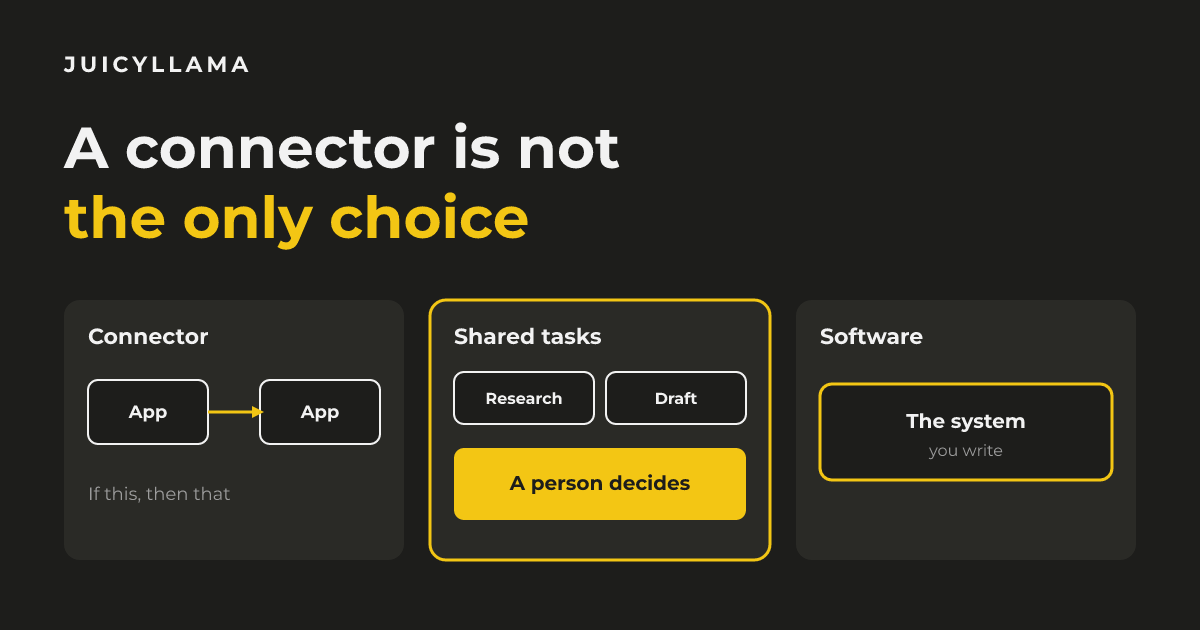
A search for workflow automation software turns up lists of tools. The lists are good for names. They are weak on the decision in front of you: buy a connector, set up shared tasks that stop for a person, or have the software written. This article is that decision. Which process to automate first is a different question, and we cover it in business process automation: what to automate first, and when to build.
What the software is
Microsoft describes workflow automation software as software that uses rule-based logic to replace a manual task, usually in the form "if A happens, then do B" (Microsoft Power Automate, read 4 November 2026). A simple example is a workflow that watches one app and updates another when a rule matches.
A buyer in the UK will also see names such as Zapier, Make, n8n and Power Automate. These workflow platforms connect apps, and can also support more involved logic, AI steps and human approvals. The useful question is which approach fits the whole job you need done.
Three ways to do the same job
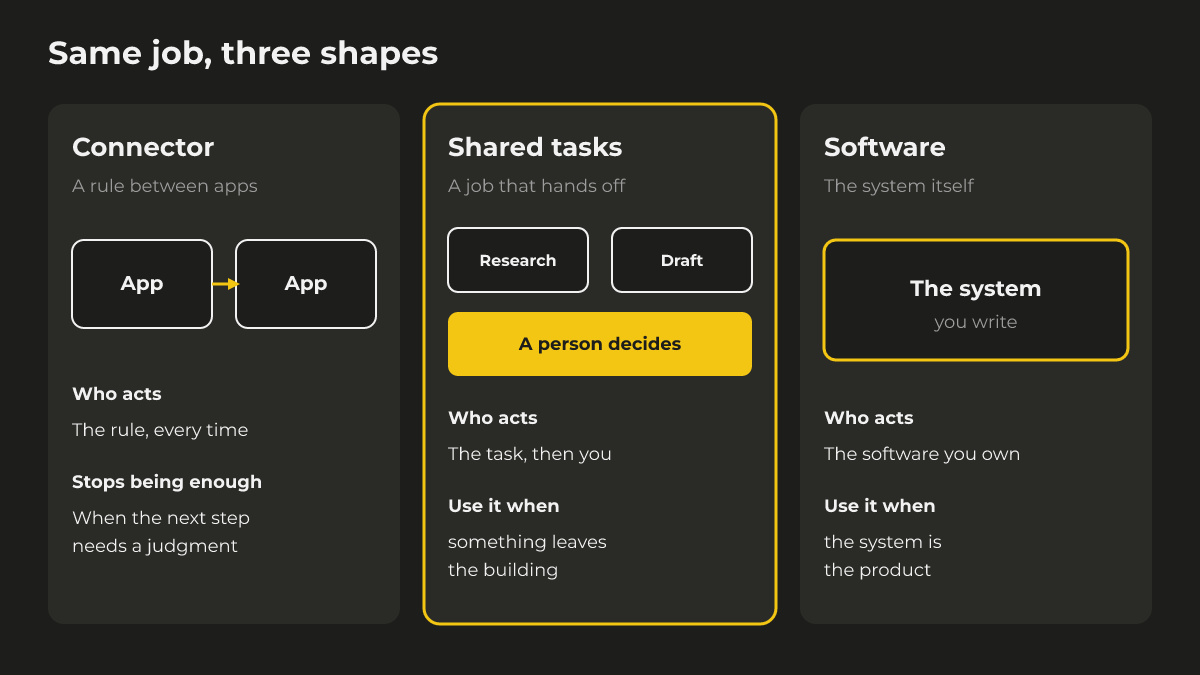
We sort the choice into three.
- A connector. The work is moving a record from an app you already use to another, and the rule is one you can write down. If this, then that.
- Shared tasks. The work is a job with steps: research, a draft, a check, then a decision. One task hands the result to the next. A gate stops anything that should leave the building until a person says so. Zero Human describes this as tasks, handoffs and gates, with a person in command (what Zero Human OS is, handoffs, gates, read 4 November 2026).
- Software you write. The system itself is the product, or the data does not fit a connector. That is bespoke software. We set out one case, and the signal we used, in the article linked above. This page does not retell it.
The picture is the same split: a rule between two apps, a job that stops for a person, or one system you write.
When a connector stops being enough
A connector is enough while the rule stays stable and both apps already exist. When the job involves research, judgment, a draft and a check, consider how you will manage responsibility and handoffs across the whole process. A workflow platform can include human approvals too. Shared agent-team tasks are another approach: each task has a defined job, and approval gates control the actions you choose to review.
In Zero Human, configure gates for the actions that need a person's decision, such as publishing a page (gates and tool scopes, read 4 November 2026). Check the task's gates and tool permissions before you start it.
A connector also stops being enough when you would be building the system, not joining two that already exist. Then write the software.
Compare the full cost
Include the initial setup, ongoing maintenance, platform and model usage, and the time people spend checking work and making decisions. For bespoke software, include the build and its ongoing operation. Compare those costs against the job you actually need done, rather than a headline subscription price. Check each vendor's current pricing and terms. For current shared tasks and automations, start at zerohuman.com.
What we run for our own marketing
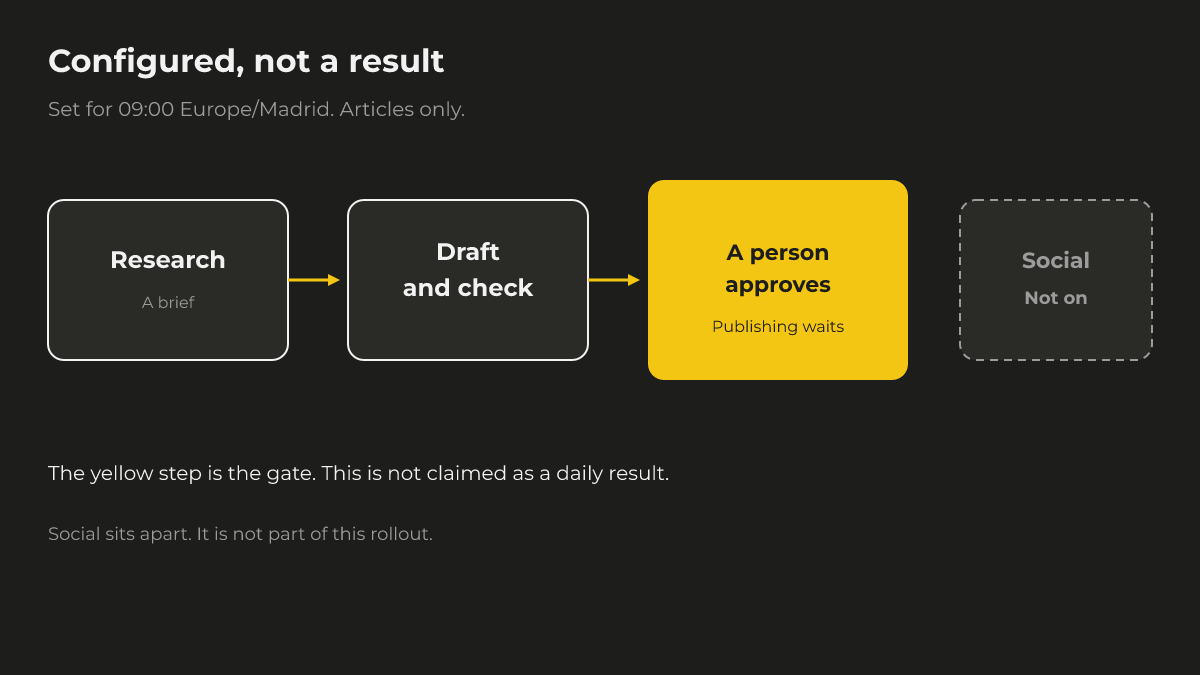
Our marketing uses shared Zero Human tasks, not a one-off connector built for the site. The chain we have configured is research, then a draft and a check, then a publishing approval. Content creation is set for 09:00 Europe/Madrid. This rollout is articles only. Social is not switched on.
The publishing approval is a deliberate part of the job. A successful drafting run is one milestone; the published page is the result to check. When choosing a setup, decide which decisions need a person and how you will verify that the work reached its destination. See Zero Human and its current documentation for the latest shared-task options.
If you have already picked a tool
Keep it for the hand-offs it does well. A connector that moves a record is still the right tool for that record. For a job that needs a draft, a check and a person's approval, compare how your current platform and a shared-task setup handle those steps. For up-to-date automations and shared tasks, go to zerohuman.com and the tasks docs.
What you keep
Whatever the shape, we hand the work over with training so your team can run it. There is no lock-in: you can hire internally or move agency later. How a shared task is changed is in the current docs, not in a one-off note from us.
If you want help choosing, talk to us. When the work is inside an engineering team, start with how a team adopts AI.