
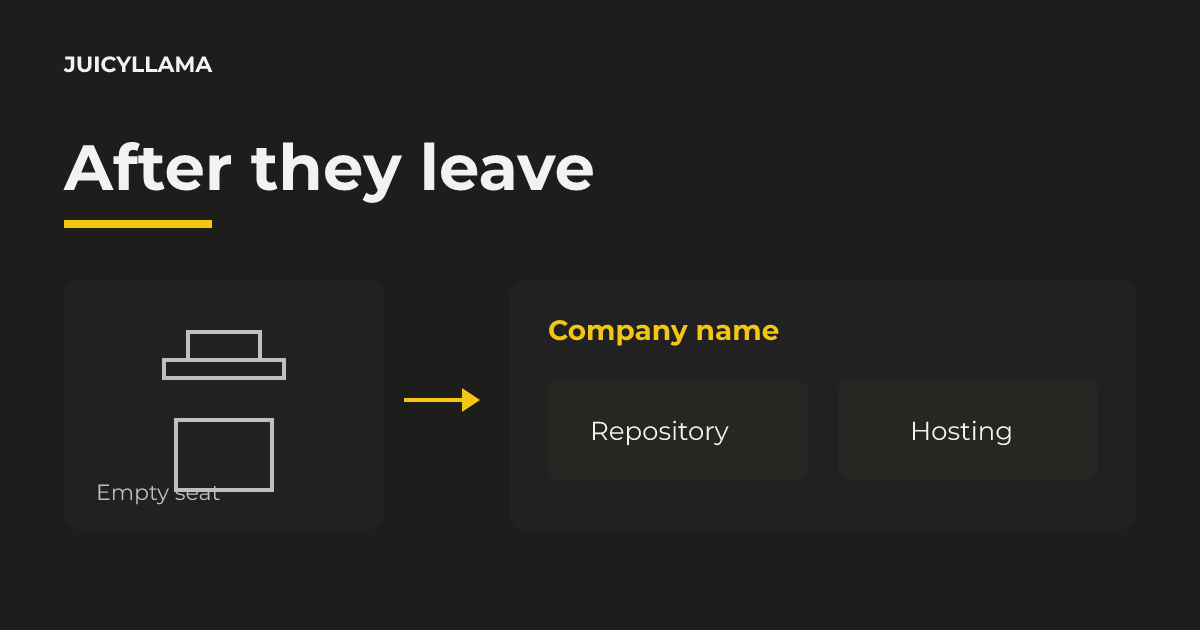
Your technical cofounder has left, or the only developer who could keep the product running has left. The product is still live, and you are not the one who built it. A lot of advice on this subject is about how to find a technical cofounder. That is not this page. This page is the first weeks after the person has gone. It is written for a nontechnical founder in that spot, as a page for the enquiry, not from a measured search volume.
We are often called in an emergency. One example is that the only developer has left. Another is that an agency is holding the client hostage over the codebase. We help with technical clarity, and with decades of experience, through a stretch we know firsthand is scary (Andy Slack, confirmed 13 November 2026). When the problem is an agency or a freelancer still holding the keys, start with who owns my app code. This page does not repeat that checklist. Here, the person has already gone.
The seat is empty
If the team is still there, the question is different. Read whether the development team is underperforming before you decide the people are the problem. If the technical lead is still there and the way of working is old, read a fractional CTO's view when the playbook predates AI-native engineering. Both of those pages assume someone is still in the seat. Do not use them as the plan for an empty one.
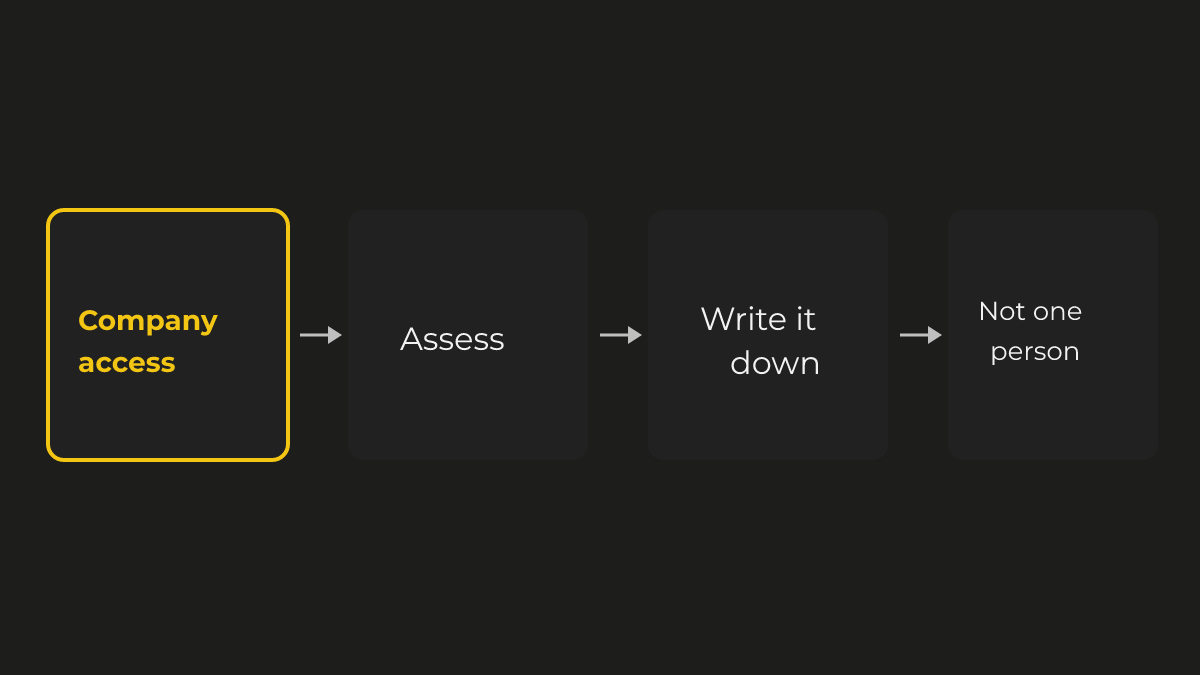
What we do in the first weeks is a short sequence. Secure access in the company's name. Assess the product before we commit to take it over. Write the decisions down in your repository. Then stay with a model that does not put the whole product back in one person's head. None of those steps is a promise that the product will be taken on. Access comes first so the company can see what it has. The assessment comes before any commitment. The writing is what stops the next person from being the only one who knows.
Secure the repository and the hosting first
The same first step applies here as when an agency or a freelancer held the keys. Secure the repository and the hosting first, in the company's name, not in one person's (Andy Slack, confirmed 13 November 2026). On this service you hold the source repository, hosting, error monitoring, product analytics and AI tool accounts in your own name. The keys article is the place for the questions to ask. This page stops at that first step.
Assess before we take it over
Before we commit to take an existing system over, we assess the product, its code, its infrastructure and how the team works (Andy Slack, confirmed 13 November 2026). The homepage already says that an existing system is assessed before a takeover, and it is where the offer and the published price live. We point there instead of repeating them.
If the fractional CTO service is not a fit, we say so and decline, or we offer a tailored scope of the same service. We do not sell a different service. For a hostile or incomplete handover, that is the whole of what we can publish. We assess the product, the code, the infrastructure and the team, then decline or stay on this service with a tailored scope. There is no handover story beside that (Andy Slack, confirmed 13 November 2026).
Change the model, do not refill the seat
The decision we can describe is the model we sell, not a hiring process. We offer a fractional CTO plus an AI engineering team. Each change's decisions and reasons are written on its issue, and the specs and tests live in your repository, so the product does not depend on one person again. You keep discovery, demand, commercial decisions, priorities, scope and budget (Andy Slack, confirmed 13 November 2026).
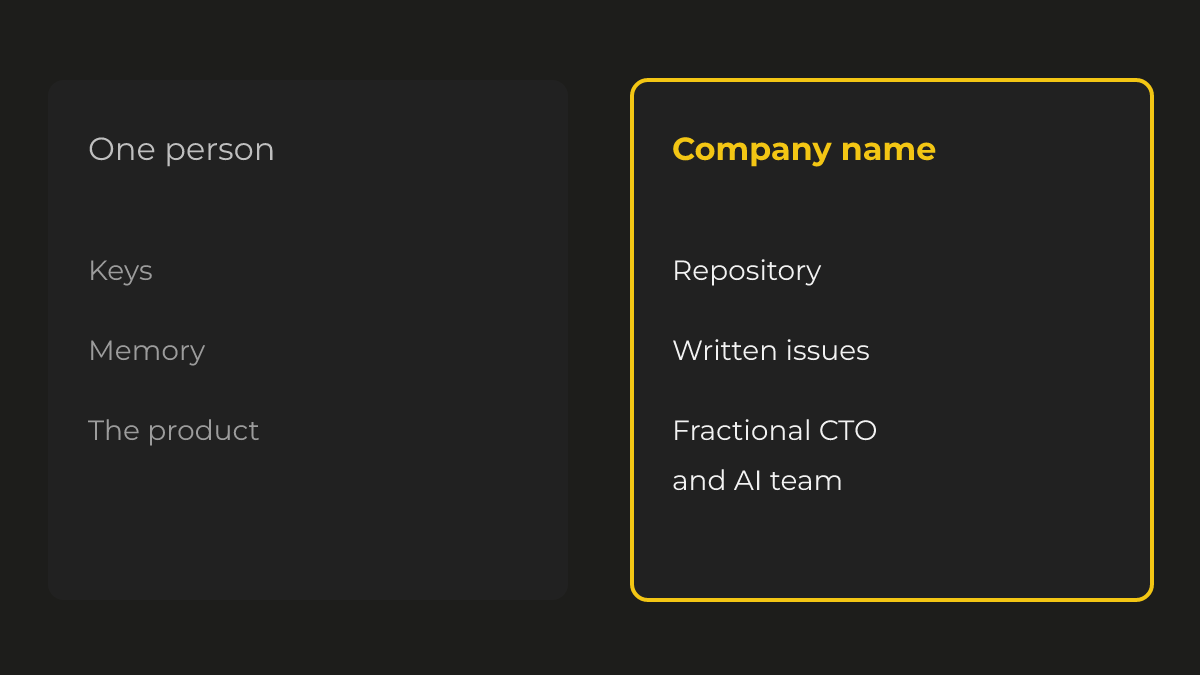
Nothing on file is a method for choosing a like-for-like developer, so this page does not describe one. The point of the model is that the next absence does not take the product with it.
Write down what only they knew
In the first weeks, each change's decisions and the reasons are written on its issue. Specs and tests live in your repository, so the product does not depend on the person who left (Andy Slack, confirmed 13 November 2026). That is the record we start. This page does not retell how a spec is written, and it does not repeat the homepage note about what happens if our own fractional CTO later changes.
Book a founder fit call
If you want to talk this through, Book a founder fit call. That is the only call to action on this page. The price, and the rule that we assess an existing system before a takeover, are on the homepage as published on 13 November 2026. Other pieces are on the articles index.