
Your development team keeps missing estimates, or the features it releases break. You cannot read the code, and you want to know whether to change the people, add more developers or change how the team is led. Start with an assessment, not a hiring decision.
This is our approach to an underperforming development team, and two mistakes we have made along the way. The practice and lessons below were confirmed by Andy Slack for this article on 11 November 2026. They are not a promise that every team can be turned around.
What you can check, and what needs technical judgement
You can ask to see when changes went live, what counts as done and who decides priorities without reading code. Our companion article covers those checks on a team's technical playbook, including how to raise them with an existing lead. Use that as your starting evidence, not as a verdict on individual developers.
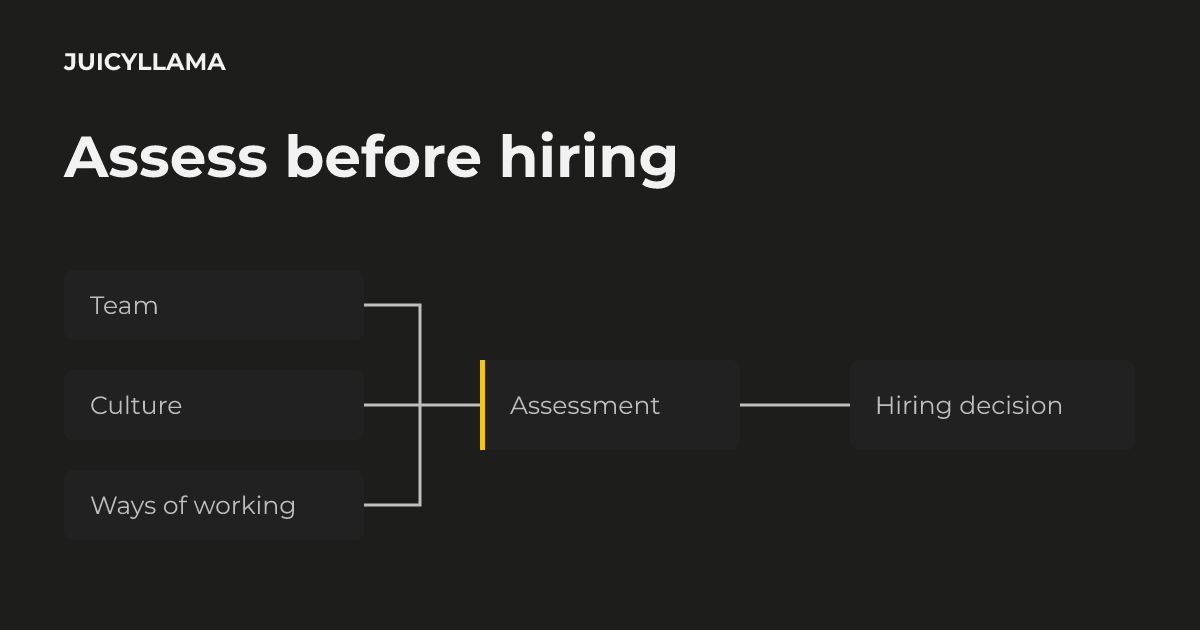
Telling a people problem from a leadership problem needs an experienced technical leader to assess the team, the company culture and its ways of working. That is Andy's distinction: a founder can ask for evidence, but an experienced CTO needs to get into the work to identify the issues and help evolve the processes. From there, the aim is to improve performance; changes to the people may still be needed.
Assess before committing to a takeover
We start with a technical assessment of the product, its code and its infrastructure. We assess an existing system before we commit to taking it over. From that assessment we write a prioritised roadmap and agree a first milestone, which can be taking over the existing system.
That is also the limit stated in our onboarding approach: an assessment comes before a takeover commitment. It is not an offer to replace a team before we have understood its work.
Why more developers are not our first answer
Andy's view is that throwing more resources at a problem normally makes the problem bigger. His first place to look is almost always the processes and workflows, the culture and the ways of working. Adding capacity is not the same decision as finding what is preventing the current team from delivering.
For a founder, the useful question is therefore not just 'How many developers do we need?' It is 'What did the assessment find, and what are we changing because of it?' That keeps the conversation about the problem identified rather than a headcount chosen in advance.
Two mistakes we have made
Asked what had not worked when taking over a struggling team, Andy named trying for too long to improve underperforming team members, and allowing senior team members to hoard knowledge.
Those lessons put a limit on 'fix the process first'. It does not mean trying indefinitely to improve someone's performance. Nor should a senior person's knowledge be a reason to leave the situation untouched. The lesson is to assess the way of working without ruling out a people change.
We are not attaching a turnaround figure or an unnamed customer's quote to those lessons. They are the mistakes Andy identified, not a case study with a measured result.
What the next step gives you
The output of the assessment is a prioritised roadmap and an agreed first milestone, not simply a recommendation to hire. In our fractional CTO plus AI engineering team offer, the CTO takes responsibility for technical direction, architecture and delivery decisions. You keep scope and budget decisions and accept onboarding against a checklist. The full division of responsibilities is on the homepage.
If you have a prototype, an MVP or a live product and need trusted technical leadership, Book a founder fit call. Bring a description of the product, its stage, its technical situation today and whether the budget fits. A 'no' on budget does not stop you booking. We email to arrange a time; if the service is not a fit, we say so and decline, or offer a tailored scope of the same service.