
eCMR in Europe: Regulation, Enforcement and What Operators Need to Know
A practical guide to eCMR, the eFTI Regulation, cross-border enforcement, and what transport operators should do before digital inspection becomes the norm.

For years, most transport operators across Europe have treated documentation as a necessary administrative task, but not as a core part of operations. Something that happens before and after the real work: moving goods. That assumption is now breaking down. What used to be paperwork is becoming infrastructure. And the shift is not driven by technology vendors or internal efficiency initiatives, but by regulation.
If you look closely at how European policy is evolving, a pattern becomes clear. The European Union is no longer just encouraging digitalization in transport. It is structuring it, standardizing it, and, quietly but decisively, preparing to enforce it.
This is where eCMR sits today. Not as a 'nice-to-have' digital tool, but as part of a broader regulatory transformation that operators cannot afford to misunderstand.
The Legal Foundation: More Than Just eCMR
Most conversations around digital freight documentation focus narrowly on the electronic consignment note, or eCMR. In reality, eCMR is only one piece of a much larger regulatory framework.
The legal backbone is the Regulation (EU) 2020/1056 on electronic freight transport information, commonly referred to as the eFTI Regulation. Its objective is straightforward: ensure that economic operators can provide freight transport information in digital form whenever authorities request it, and that those authorities are obliged to accept it.
This is a fundamental shift. Historically, even when companies digitized their internal workflows, authorities could still require paper documents during inspections. The regulation reverses that logic. It creates a legal obligation on authorities to accept structured electronic data, provided it complies with the defined standards.
The scope goes beyond eCMR. It includes all regulatory information required under EU and national legislation for the transport of goods, including customs data, transport documents, certificates, and more. eCMR becomes relevant because it is the most visible and operationally critical document in road transport, but it is not the end point. It is the entry point.
National Adoption: A Fragmented Reality
While the regulation is European, implementation is not uniform. Each Member State is responsible for building or enabling the systems that will allow authorities to access and verify digital transport information.
This creates a transitional phase where the legal framework is harmonized, but operational reality remains fragmented.
Countries such as France, Spain, and the Netherlands have already made progress in recognizing eCMR and enabling digital documentation in practice. Others are moving more cautiously, often constrained by legacy inspection processes, lack of infrastructure, or internal coordination challenges between agencies.

For operators working domestically, this may seem manageable. For those operating cross-border, which, in Europe, is the norm rather than the exception, the situation becomes more complex. A digital document accepted in one country may still be questioned in another. Not because it is invalid, but because enforcement practices are not yet aligned.
This is where many companies make critical mistakes. They assume that because enforcement is inconsistent, the urgency is low. In reality, inconsistency is precisely what increases operational risk.
Cross-Border Recognition: The Real Test
The promise of eCMR has always been strongest in cross-border transport. A single, standardized, digital document replacing multiple paper-based processes across jurisdictions.
Legally, the framework for cross-border recognition exists through the Additional Protocol to the CMR Convention on the electronic consignment note. Countries that have ratified this protocol recognize the legal equivalence of the electronic consignment note.
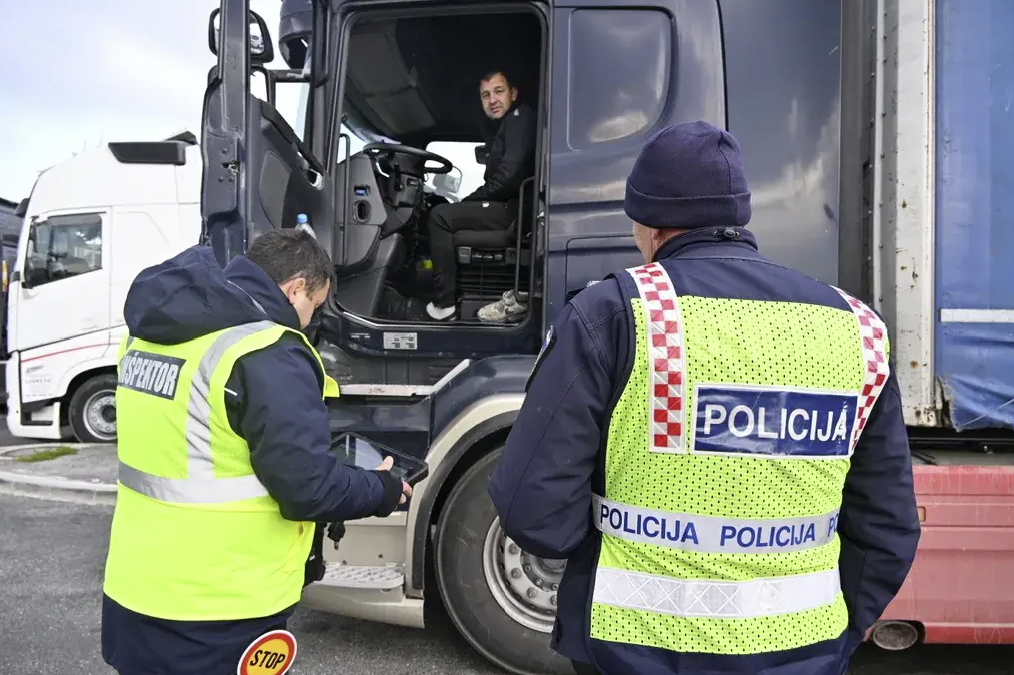
However, legal recognition does not automatically translate into operational acceptance. Roadside inspections are still conducted by national authorities, often with their own tools, procedures, and levels of digital readiness.
This creates a gap between what is legally valid and what is practically frictionless. Drivers may still be asked to present documents in formats that inspectors can quickly verify. Back offices may still need to intervene to reconcile discrepancies. The theoretical efficiency of eCMR can be undermined by the lack of end-to-end integration.
In other words, the challenge is no longer about whether eCMR is legal. It is about whether your operational setup can make it work reliably across different enforcement environments.
Enforcement: Uncertainty by Design
One of the most misunderstood aspects of the current landscape is enforcement. There is an expectation that regulation will be followed by a clear, uniform enforcement wave, a specific date after which non-compliance will be penalized consistently across Europe.
That is not how this transition is unfolding.
The eFTI Regulation includes a phased implementation timeline. Member States are required to ensure that authorities accept electronic freight information by mid-2026, with additional specifications and delegated acts defining technical standards along the way. But enforcement does not switch on overnight. It evolves.
In practice, this means a period where digital and paper coexist, where some authorities actively request digital data while others continue to rely on traditional methods, and where inspections increasingly depend on the ability to access, validate, and interpret structured information.
This ambiguity is not a gap in the system. It is part of the transition. And it creates a specific type of risk: not immediate non-compliance penalties, but operational inefficiencies, delays, and inconsistencies that accumulate over time.
Inspection Is Becoming Digital
What is changing fastest is not the document itself, but the inspection process.
Authorities across Europe are investing in tools that allow them to access transport data remotely or on-site without relying on physical documents. Mobile inspection devices, API-based access to transport data, and centralized platforms are gradually replacing manual checks.
This shift has two important consequences.
First, the speed of inspections increases. When data can be accessed and validated digitally, there is less tolerance for missing, inconsistent, or delayed information. The margin for error shrinks.
Second, the focus moves from document possession to data integrity. It is no longer enough to 'have the document.' The data behind it must be complete, consistent, and traceable across systems.
Operators that treat eCMR as a digital PDF or a standalone app will struggle in this environment. The requirement is not digitization at the surface level, but integration at the workflow level.
The Risk of Partial Compliance
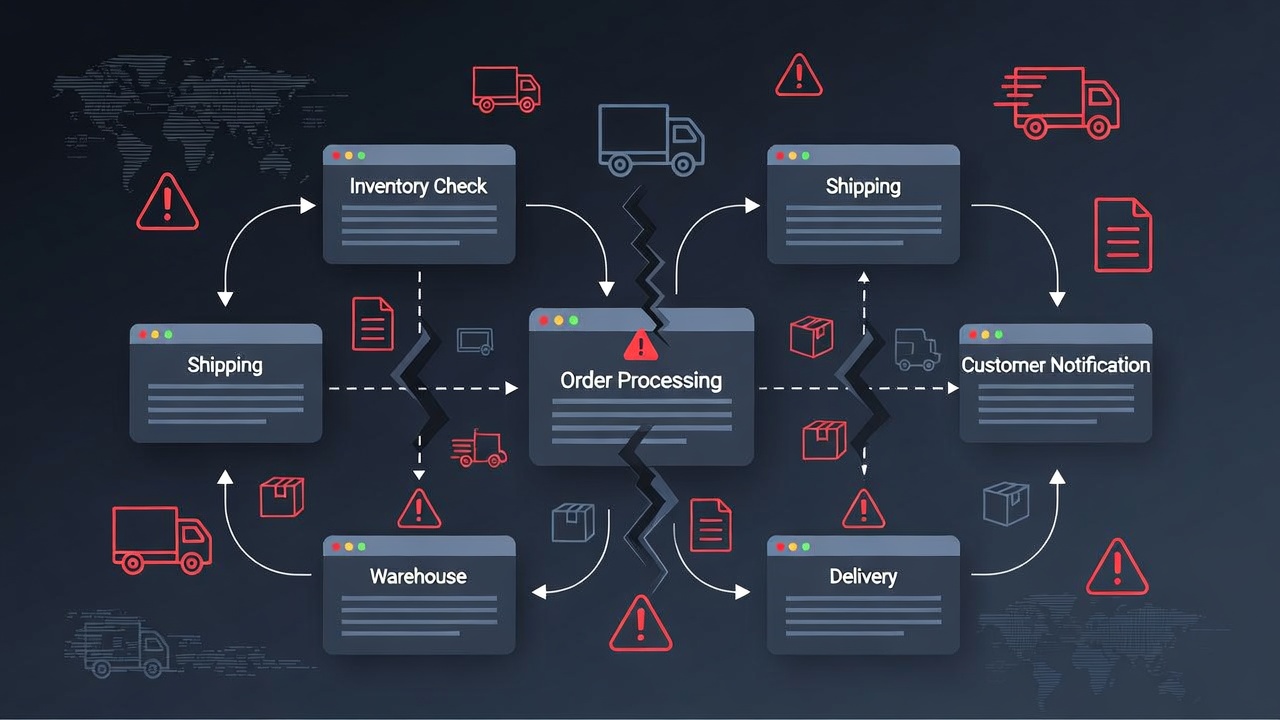
This is where many companies fall into a false sense of progress.
They adopt an eCMR solution, often as a pilot or as a response to a specific customer request. Drivers use an app. Documents are generated digitally. On paper, the company is 'digital.'
But the underlying workflow remains fragmented.
Data is entered multiple times across systems. The transport management system is not fully integrated. Billing still depends on manual validation. Exceptions are handled through emails and phone calls. Documents are stored, but not structured in a way that supports real-time access or automated checks.
This is partial compliance. And it is more dangerous than no compliance at all.
Because it creates the illusion of readiness while introducing new points of failure. When inspections become more data-driven, these gaps become visible. When operations scale, they become bottlenecks. When disputes arise, they become liabilities.
Timeline Expectations: What Actually Matters
It is tempting to focus on deadlines. 2026 is often cited as the key milestone for the acceptance of electronic freight information by authorities.
But deadlines are only part of the picture.
What matters more is the direction of travel. Regulatory frameworks, industry standards, and enforcement practices are all moving toward the same endpoint: structured, accessible, and verifiable digital transport data.
The companies that wait for a 'final' deadline are effectively choosing to compress a multi-year transformation into a short implementation window. That rarely ends well.
In contrast, operators that start early have the advantage of iteration. They can test workflows, integrate systems gradually, align with partners, and adapt to evolving standards without disrupting their core operations.
Why Waiting Is the Real Risk
From a purely operational perspective, the argument for delaying adoption often seems reasonable. Enforcement is not uniform. Paper is still accepted. Existing processes, while inefficient, are familiar.
But this view underestimates how quickly the environment is changing.
The risk is not that a regulator will suddenly impose fines across the board. The risk is that the ecosystem around you, including customers, partners, and authorities, will move faster than your internal capabilities.
Shippers are already demanding more transparency and faster documentation cycles. Authorities are investing in digital inspection tools. Competitors are experimenting with integrated workflows that reduce administrative overhead and improve cash flow.
At some point, the gap becomes visible. Not as a compliance issue, but as a performance issue.
What Operators Should Really Focus On
The question is no longer whether to adopt eCMR. It is how to embed it into a broader operational model that aligns with where regulation and enforcement are heading.
This means rethinking workflows, not just tools. It means ensuring that data flows seamlessly from order creation to delivery confirmation, without manual re-entry or loss of information. It means being able to provide, validate, and audit transport data in real time, across systems and jurisdictions. And it means treating digital documentation not as an isolated feature, but as a core component of operational intelligence.
Because that is ultimately what the regulatory shift is pushing toward. Not just digital documents, but a digital representation of transport operations that can be accessed, verified, and trusted by all parties involved.
A Structural Shift, Not a Technical One
It is easy to frame eCMR as a technical upgrade. Replace paper with digital, implement a tool, train drivers, and move on.
That framing misses the point.
What is happening is a structural shift in how transport operations are documented, verified, and governed. Regulation is setting the direction, but the impact is operational.
Companies that understand this will approach eCMR differently. Not as a compliance project, but as an opportunity to redesign how their operations function under increasing regulatory and commercial pressure.
Those that do not will continue to treat it as an add-on, and will feel the friction as the gap between legal frameworks and operational reality continues to close. The regulation is already in place. The timelines are defined. Enforcement is evolving.
The only variable left is how prepared you are when these elements converge.